Is a Mascot Logo Right For Your Home Service Brand?
Mascots for brands are nothing new. These character-based logos have been around for decades upon decades at this point. In the home services space in particular though, they have become quite popular, cementing themselves as one of the staple marketing tools for many companies in the industry. That being said, not every brand has a mascot logo, nor do they necessarily need one.
Even in our own branding projects, it’s common for a client to come in thinking they need a mascot. On the flipside, sometimes a client comes in initially opposed to them. But after picking a client’s brain about what their project needs are, it often makes more sense to recommend a pivot in a different direction than what they initially thought they needed.
Some of the factors to consider when deciding what logo style to pick for a branding project include:
Brand name
Brand story
Brand positioning
Competition
Market segments the brand serves
Specific business goals and challenges
The Case for Mascots
Beating Negative Biases
Unfortunately, there is sometimes a stigma around those in the trades being seen as sketchy or untrustworthy. Mascots are great because they are both attention-grabbing and disarming. They feel friendly, inviting, and put people’s minds at ease. These are the exact qualities you’d like to instill when it comes to your employees showing up at a customer’s home. A more traditional logo with some sort of abstract brand mark can still accomplish this, but mascots have a uniquely easy time doing so.
Target Audience
We also have to remember that women overwhelmingly tend to be the decision-makers when it comes to home purchases. The feelings a mascot creates can make women feel safer about the unfamiliar men showing up at their homes. They’re less likely to look at the cute character on the side of the truck and immediately think they’re going to be ripped off or upsold on a bunch of stuff they don’t need.
On that same note, we have to think about the appeal these characters have to kids. That might seem odd given that children aren’t going to be the ones writing the checks to your company, but who are these kids usually with? Mom, getting picked up from school, being taken to soccer practice, etc. Having kids be able to turn to Mom and say, “Hey! Look at that truck with the cool cartoon on it!” is a powerful way to keep your company in the back of Mom’s mind for when she eventually does need service.
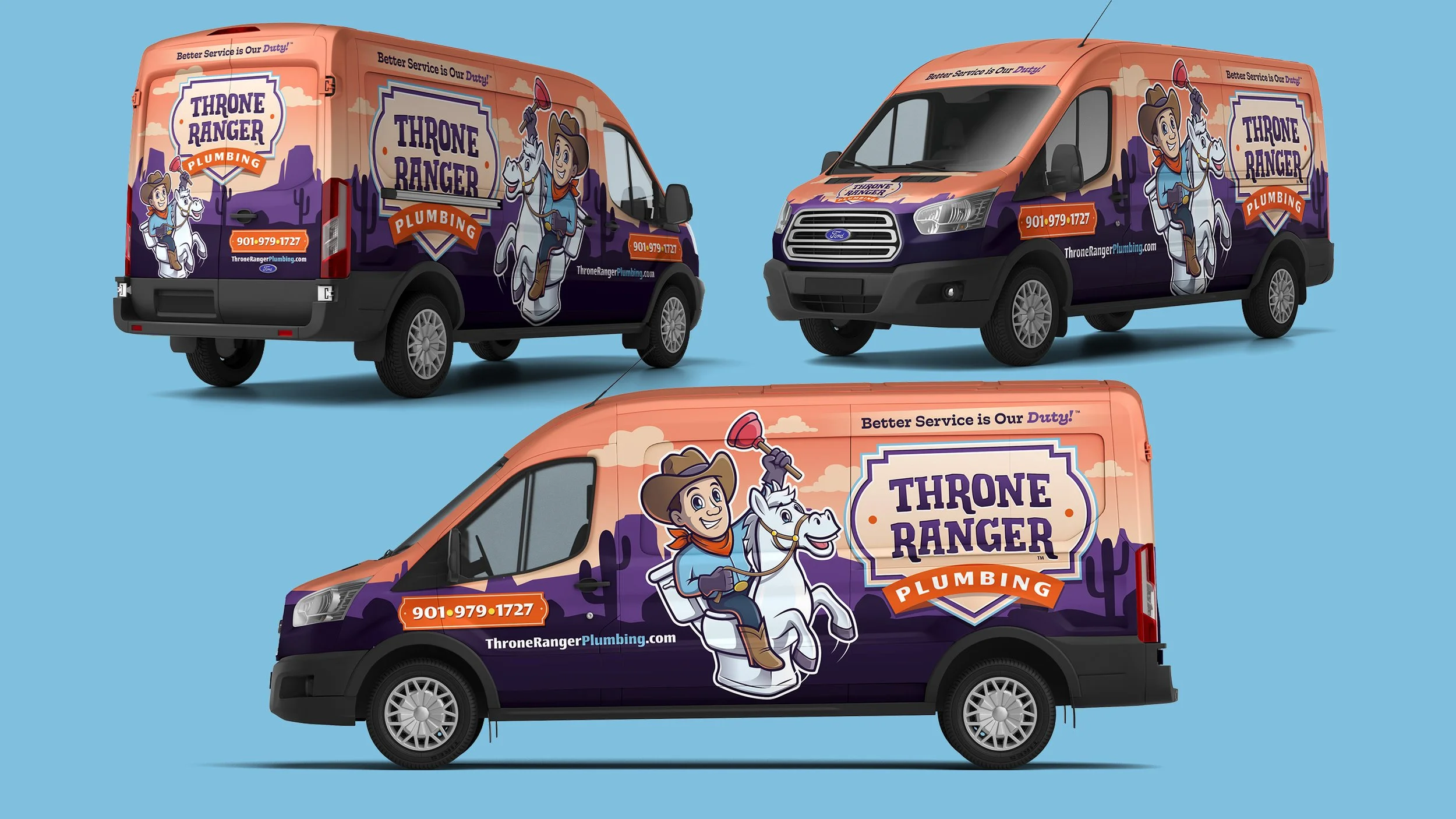
One thing I personally love about mascot logos is how much fun they allow your company to have when it comes to things like community events and trade shows. Think of physical items like plushies to give away, or even an actual mascot costume that kids can take pictures with. Or promotional items like stickers, keychains, coloring book pages, etc. Taking your work seriously is great, but having fun and not taking your company too seriously in these public settings can also be valuable.
Brand Story
Mascots can also be a great tool for brands built around specific retro time periods. They are often associated with various time periods spanning the early to mid 1900s. If you are a brand that has a lot of heritage in its brand story, or simply wants to evoke the feelings associated with some of these classic periods in time, a retro-themed mascot can be a viable way to do so.
Avoiding the Wrong Kinds of Mascots
Poor Execution
Not all mascots are created equal, though, both in terms of execution and style. Compared to companies that use a logo with a brand mark, mascots are much easier to mess up. The slightest mistake in how their face or anatomy is rendered can plunge the character into weird, uncanny, nightmare-inducing territory.
For this reason, you need to be picky about who you hire for such a job. I’m biased as a brand designer, so I think you should be very selective about who you hire for really any branding work, but for mascots, it’s that much more important to hire a person or company that specializes in this type of work. Graphic design is very similar to the medical field in terms of how specialized everyone is. There are plenty of great logo designers, or graphic designers in general, who aren’t great illustrators or character artists.
Wrong Illustration Style
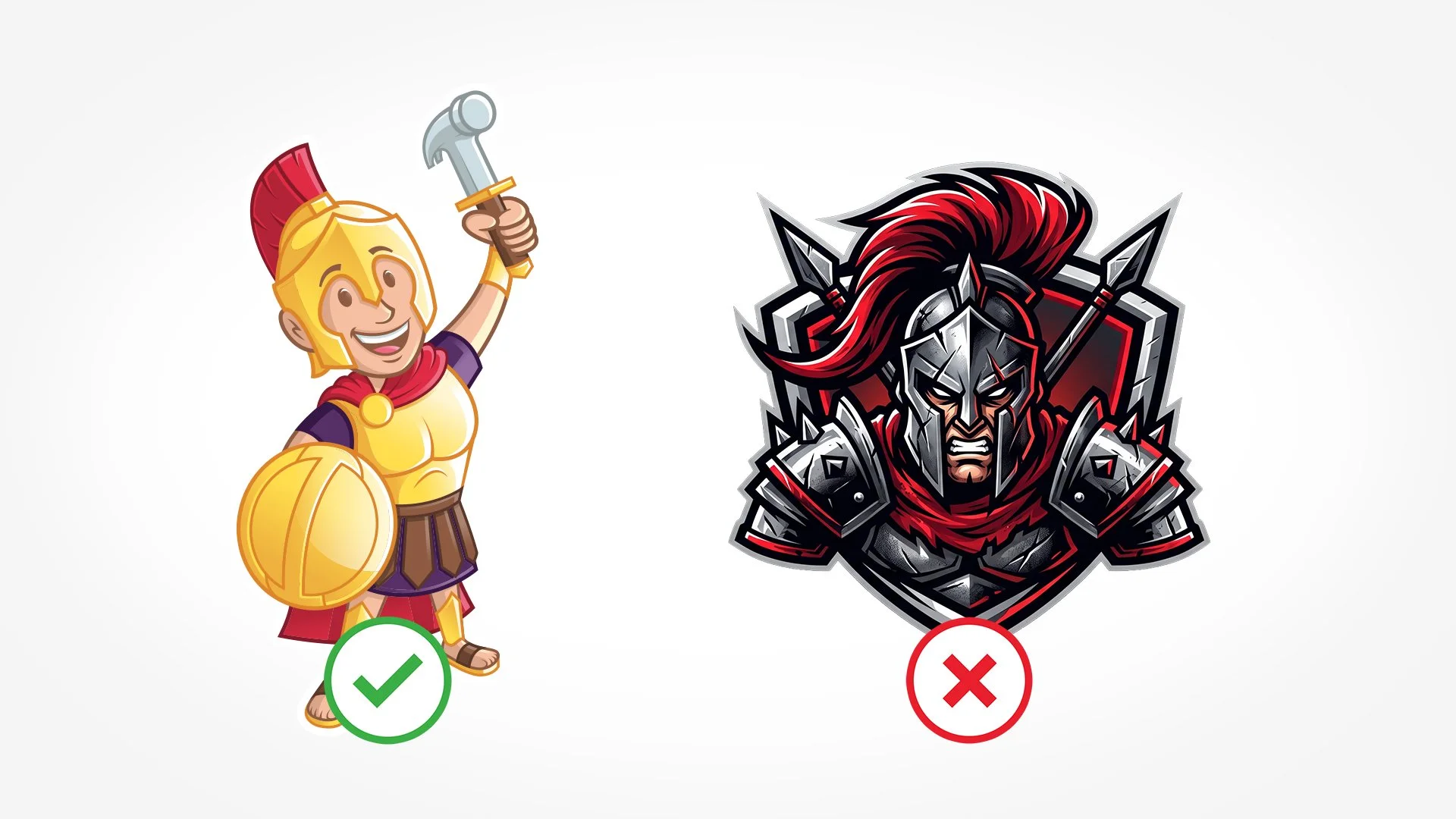
One of the other most common mistakes I see out in the wild is how many companies use the wrong types of mascots. If you do a quick Google search for “mascot logo,” the vast majority are sports and e-sports-style mascots, which would be a style that is completely inappropriate for a home service brand. Let’s think about the function of a mascot for a sports team compared to that of a home service company.
The goal for a home service company is to appear friendly, inviting, and trustworthy. The goal for a sports team is to intimidate the other teams and appear aggressive. These functions are quite literally polar opposites of one another, but oftentimes, a company that doesn’t know any better will deploy one of these more off-putting mascots simply because they look “cool.” That’s not to say every mascot needs to be a bubbly cartoon character, but things like the pose, how muscular they are, the facial expression, etc., all need to be designed with the function they will serve in mind.
The Case Against Mascots
Competition
One of the first things we look at for a branding project is what your competition looks like. If mascots for companies in your industry are already everywhere in your local market, it’s most likely a good idea to avoid using one. Part of the point of a mascot is to help your company stand out, but that’s hard to do when everyone is deploying the same strategy to accomplish that. There are other ways to make your brand memorable through visuals, color, language, etc.
Market Segments
Most of this discussion has been focused on the residential side of these businesses, but many companies also do varying amounts of commercial work. If you are a company that has a large focus on commercial work, or wants to focus more on commercial work, this is another instance where a mascot brand might not be a good fit. The men who typically make these purchase decisions usually aren’t as interested in these whimsical cartoon characters and don’t experience the same type of unease that mascots are trying to alleviate among women on the residential side.
In some of these instances, a mascot still can be used, but I would recommend an illustration style that is slightly more mature than some of the cute, googly-eyed characters that work well with residential customers. Think more like Armor All and less like the Pillsbury Doughboy. Also consider the mascot’s subject matter. For example, if everyone is using mascots based on four-legged animals, perhaps pick a mascot based on a human or something more abstract.
Final Thoughts
So does a home service brand really need a mascot? Not necessarily. There are many great brands with memorable logos that have stood the test of time without incorporating a character into them. But that also doesn’t mean you shouldn’t use a mascot. As I mentioned, there are a lot of factors to consider when deciding on the art direction and logo style for a brand. Every company and every market they operate in is going to be unique, making it impossible to prescribe a one-size-fits all approach to a mascot logo.
If you are considering incorporating one, I recommend consulting with a competent brand design company that commonly work with those in the trades. Whether it be us here at Wraps Ink, or another similarly competent company, they will be able to talk to you and help best guide you on what will be most effective for your specific case.
Drive Your Brand Forward
If you want to take your company’s branding to the next level, you found the right team for the job. You can give either of our offices a call, or send us an email to start a conversation about your project.
Murrells Inlet: 843.651.6003
Charleston: 843.823.9274
Email: sales@wrapsink.com