Should You Rename Your Home Service Business?
Your company’s name is the foundation of its brand, but too often this part of launching a new business is done quickly without being given the proper consideration. Early on owners often have to be scrappy, wearing multiple hats as they focus on getting their new business functioning and off the ground. Creating a killer brand identity is occasionally one of the first things to hit the chopping block as other things are prioritized to launch a new venture.
Choosing a name isn’t just a legal obligation for you to be able to launch your business though. Your name can either directly help or hinder your brand’s success. A great name can make your brand easier to remember, and can actually be a huge asset for your digital marketing.
However, a weak name does just the opposite. It can make you more obscure in your market and actually cost you far more money in both physical and digital advertising to try to become remembered.
As a brand designer, I can also tell you that it makes our job at creating the visuals for a brand substantially easier when there is a strong name at the foundation. So, yes, selfishly I would love to see more companies adopt better naming conventions, but this really is a situation everyone stands to benefit from it.
So you have a name for your business, maybe it’s even doing well, but you’re wondering “Is my current name good enough to take me where I want to go? Should I make a change while I still can?”
A few things to consider for any potential renaming:
Do you own the current name?
How much brand equity exists in the current name?
Is the current name still relevant for the brand?
Does it have at least 3 of the 4 traits below for a good name?
Name Ownership
Checking who actually owns your current name is one of the quickest ways to tell if you should change it. You would be surprised by how many companies are operating under a name that someone else owns the trademark to. One way to check on this is to do a trademark search. If you are a home service company you will most likely want to search for names under the 037 classification.
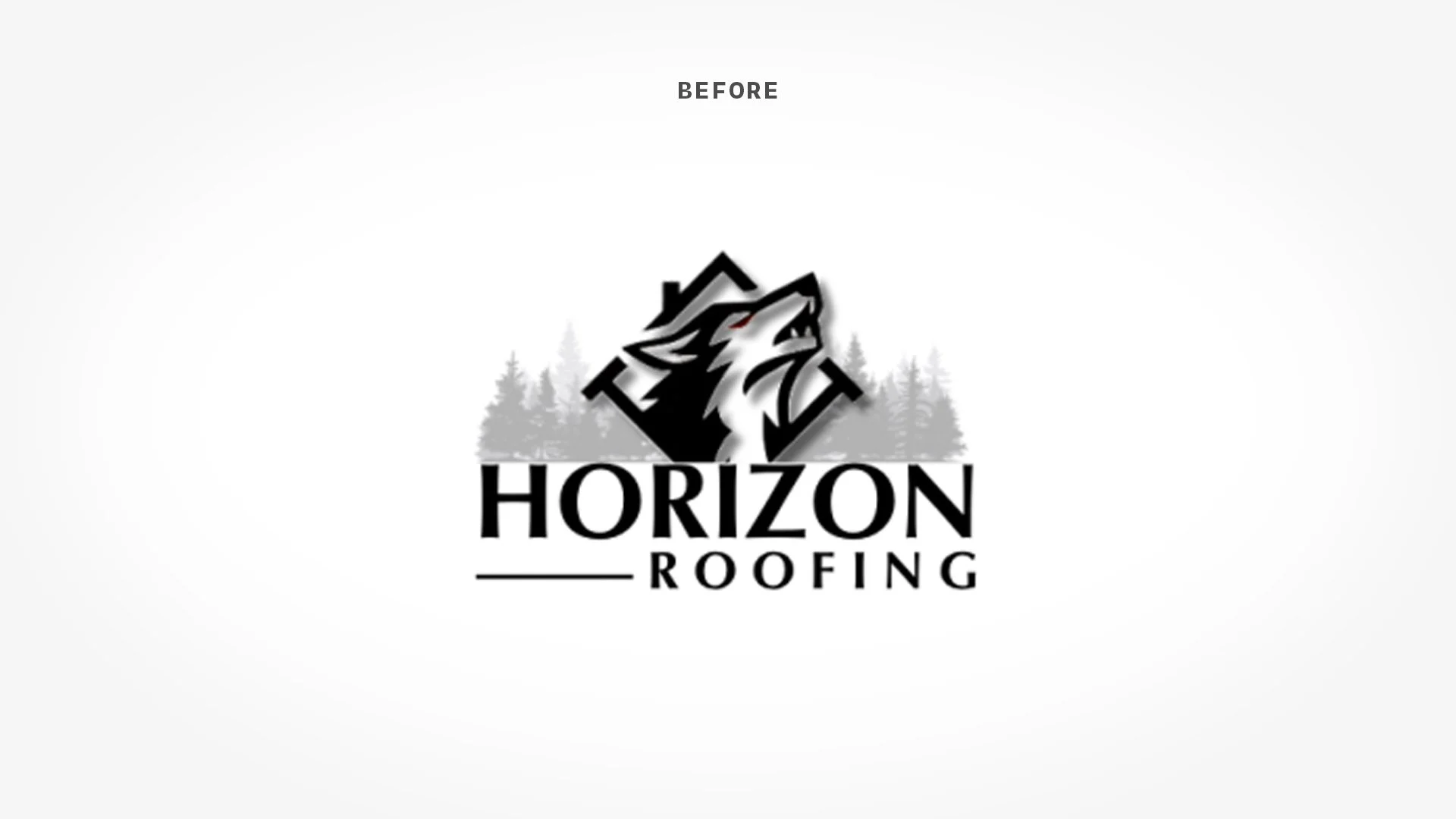
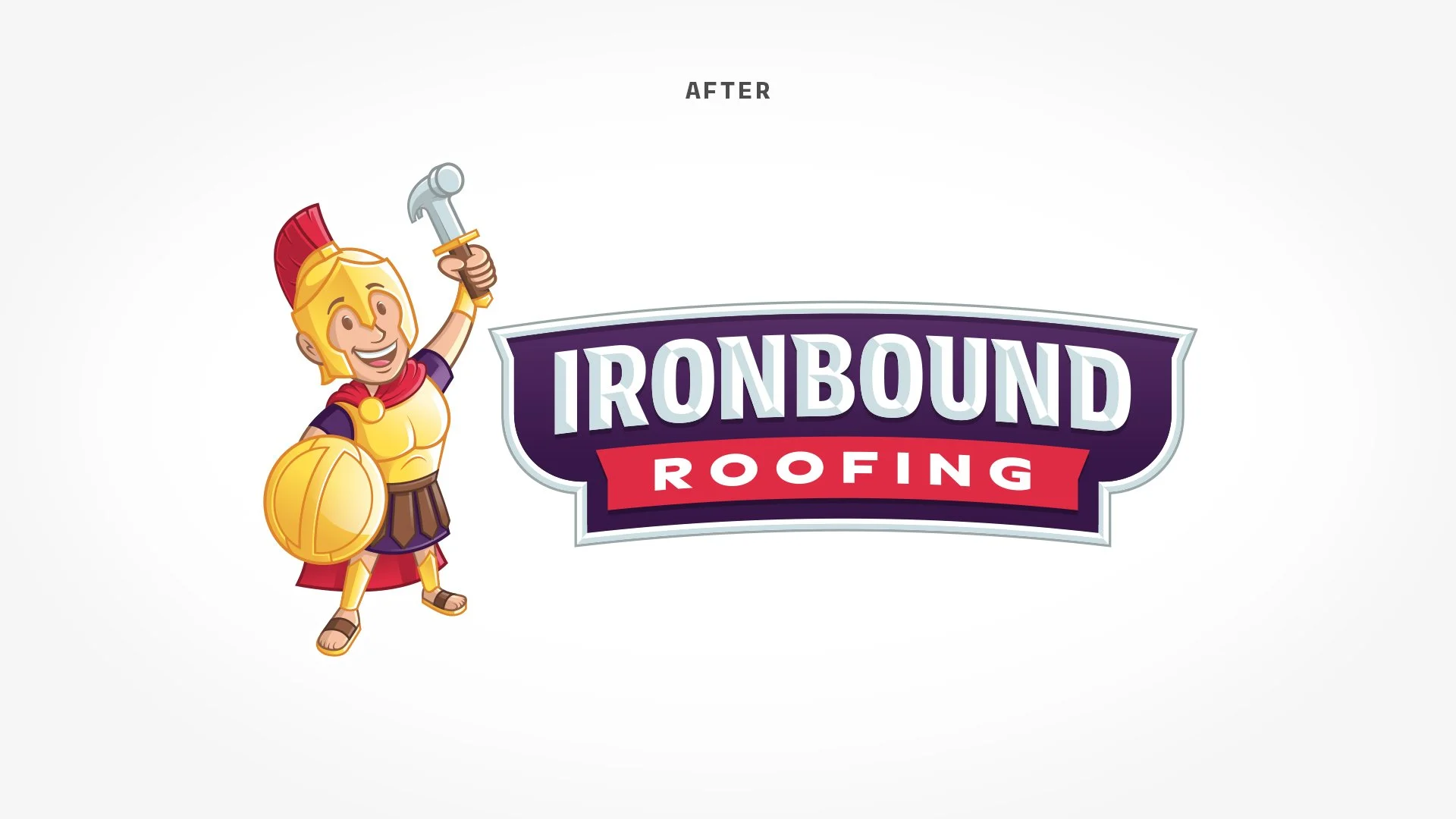
As an example, Ironbound Roofing came to us under the name Horizon and were open to a name change, in part because the name was already owned by someone else. As a newer company, they also had little brand equity tied up in the previous name, making such a pivot relatively easy to do. And speaking of, that brings us to…
Brand Equity
How long as your company existed with this name? A 100 year old company has a lot more heritage and equity tied up into their name than a company that has only existed for 10 years. Sometimes there is so much brand equity tied up into an existing name that it becomes almost impossible to be untangled from it.
And that can be okay. Even if it is an otherwise “weak name,” names unintentionally take on new meanings to people over time. If this name has existed for an unusually long time and grown to mean something very positive to people in your community, you might not need to change it.
But it still could be worth changing if this name doesn’t have the positive association or recognition in your community that it needs to. You could also still consider a change if you are planning to expand into new markets, where people have no knowledge of the brand and just see the name as “weak name.”
Brand Relevance
Has the company’s identity evolved in a way where the current name no longer makes sense? If your company’s name is something like The Jolly Plumber, but over the years you’ve evolved to offer HVAC and electrical work as part of your core service offerings, then there is now a misalignment with the brand promise your name delivers versus what the brand actually offers.
In this specific example, having the name “Plumber” makes the brand sound plumbing-centric and implies that these additional services are an afterthought. Think of this from a customer’s point of view. No one wants sushi from a gas station. They want it from an actual sushi restaurant. In the same way that they don’t want to get HVAC work done by a plumber. They want to get it from a company that sounds like they actually specialize in that work.
The 4 Traits of Good Names
Fundamentally, the function of any good name is to help people remember and identify a brand. Unlike large national brands with huge advertising budgets, an additional important function for small businesses and home service companies is to also help clarify what industry they are in.
I believe there are generally 4 traits that best help accomplish this. I think any great name needs to possess at least 3 out of the 4, always with the first 2 traits.
1. Unique
This might sound like an obvious trait, but more often than not this is one of the most overlooked ones that we see. Yes, a unique name will help you become more easily remembered, will be more ownable, and will reduce chances of brand confusion.
But in addition, unique names really shine when it comes to your digital marketing. They allow you to more easily secure the domain names and social media handles you need. No one wants to add .net, a bunch of hyphens, or some other suboptimal language to their URLs and handles that reduces a customer’s ability to successfully look you up online.
SEO also becomes easier and cheaper. When you have a unique, ownable name there are naturally fewer people bidding on those search terms. Wouldn’t it also be great to increase your odds of having actual branded searches instead of people just Googling “plumber/roofer/electrician/etc near me?”
2. Concise
We usually encourage names to be easily spelled and to stay somewhere around 1-3 words and/or 1-5 syllables at max, not counting the clarifier at the end of the name (roofing, plumbing, etc.). Less is generally more though. The more you throw at someone, naturally the more challenging it becomes to remember. If the name does trend towards the longer side of these ranges, I would mainly reserve it for names that provide a brand promise. More on that shortly.
3. Conjurs Imagery
Names that conjure some sort of imagery when people hear them is a great way to make them more sticky and easily remembered. Bonus points if the visuals that come to mind also are associated with something positive.
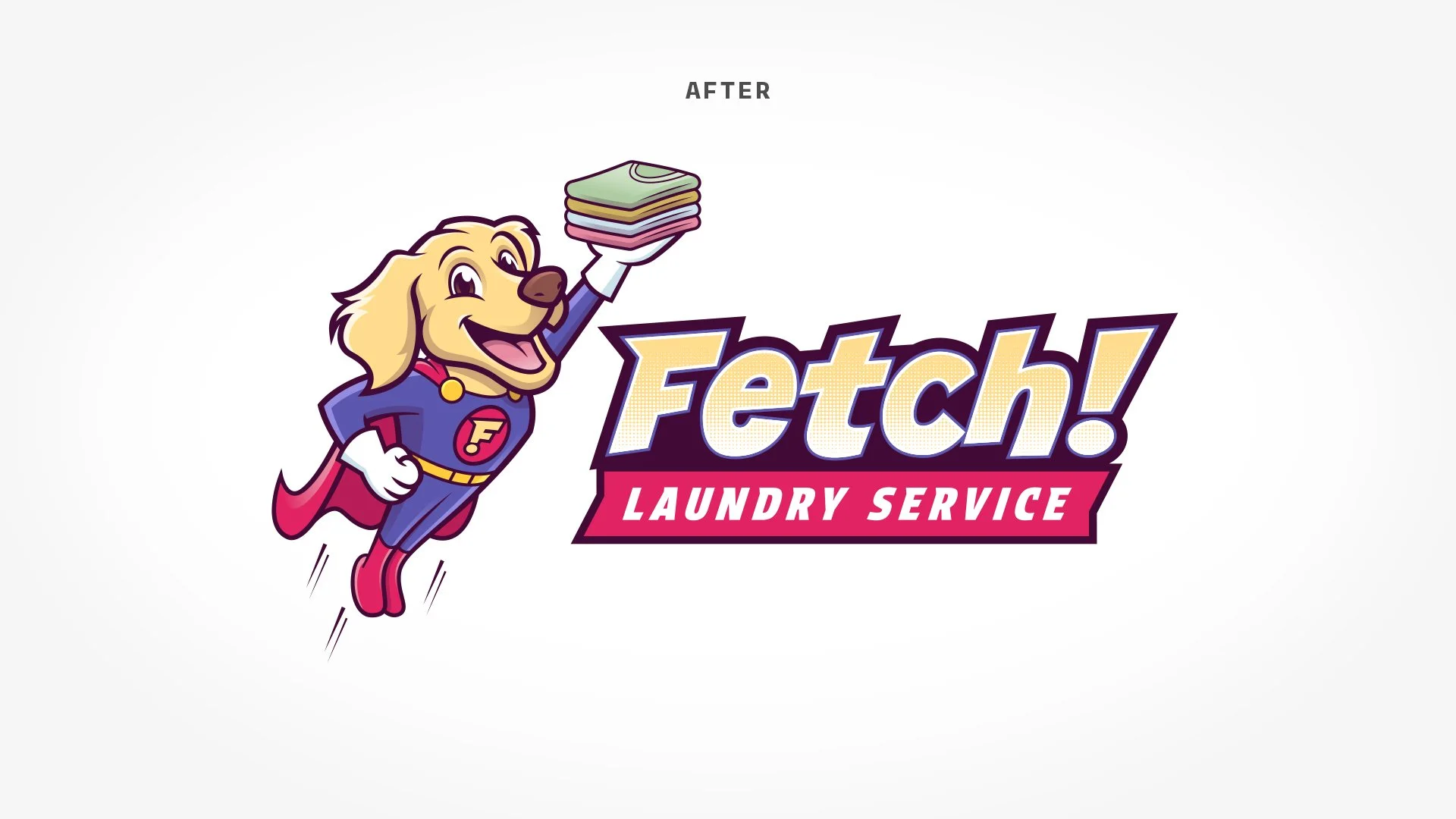
If your name is something like T&H Heating & Air, it may be concise, but there is nothing in T&H that creates a visual for people to help recall the brand, nor does it provide any brand promise. Contrast that with Fetch! Laundry Service below. A customer doesn’t have to even see their logo to already start thinking of some sort of dog visual. Or if they have previously heard of the brand and then only see their mascot, they can potentially even assume the brand.
From a brand design perspective, I love working with these types of names. They allow you to make a logo and visuals that clearly connect to the name and become part of a larger cohesive theme. There’s a great synergy that you get from this naming and logo combo that you don’t get from more abstract or loosely connected name and logo combos.
4. Has a Brand Promise
What if there was a way to set expectations about your company, product, service, or customer experience without the need for any additional customer education? That’s the power behind picking a name that has a positive brand promise built into it.
Let’s go back to “The Jolly Plumber” example from earlier. It still might not be a good name if they did plan to expand into other trades, but it does have a positive brand promise built into it. Without having to read a piece of literature or interact with someone from their team, you already know that they pride themselves on delivering a positive customer experience with friendly staff.
In a perfect world you have a name that has both a visual and brand promise built into it, but truthfully for a good name you just need one of two. Sometimes if a specific visual is more important to the brand, you can instead deliver a more direct brand promise through something like your company tagline.
Names to Avoid
Unfortunately the naming conventions we recommend avoiding are also the most common ones. Not just because of how widespread they are in virtually every market you go into, but they also have the most functional issues. With some exceptions, these names are going to be names that are based on:
Acronyms
Initials
A last name
A geographic location
Acronyms, Initials, & Last Names
These 3 names face the same challenges. The meaning being ascribed to the name is far too personal and specific. As an owner, you might know what this type of name represents. In your mind, your last name stands for some sort of quality benchmark, or a pair of initials might represent the company’s founders.
The issue is that, to your customers, it is just a random string of letters or a last name. Because these types of names usually aren’t unique, don’t conjure a visual, and have no brand promise tied to them, they are names that people have no reason to care about and will not be easily remembered.
Exceptions to this can be if the name also happens to stand for something that is commonly recognized. Think of something like A1, or a last name like Green.
Geographic Locations
Whereas the names above have meaning that is far too personal, one of the issues with geographic and city-based names is that there are too many other entities attempting to attach meaning to them, making them impossible to own in the minds of people.
For example, as a company that is based out of the east coast in South Carolina, there are a million and one companies in our region named some variation of Carolina or Coastal. Like I said, these names are challenging to own (literally and figuratively), create brand confusion, and create problems if you ever want to franchise or just expand outside of your current region.
Closing Thoughts
But if you have made it this far into this blog post, the fact that these naming mistakes are so common is actually great news for you. Capitalize on the fact that so many companies are making these brand-related mistakes. It’s always great when competitors open a lane for you to easily position yourself as the adult in the room.
If you are wondering if a name change might be a good idea as part of a rebranding effort, feel free to connect with us below. We aren’t shy about recommending such a change if we see where it can be beneficial, but we just as frequently work with companies where we never recommend this type of pivot. Every project has different needs and we do our best to cater our deliverables to those needs.
Drive Your Brand Forward
If you want to take your company’s branding to the next level, you found the right team for the job. You can give either of our offices a call, or send us an email to start a conversation about your project.
Murrells Inlet: 843.651.6003
Charleston: 843.823.9274
Email: sales@wrapsink.com